
Overview
How does Dr. Bhargava Mulpuri treat esophagus & stomach conditions?
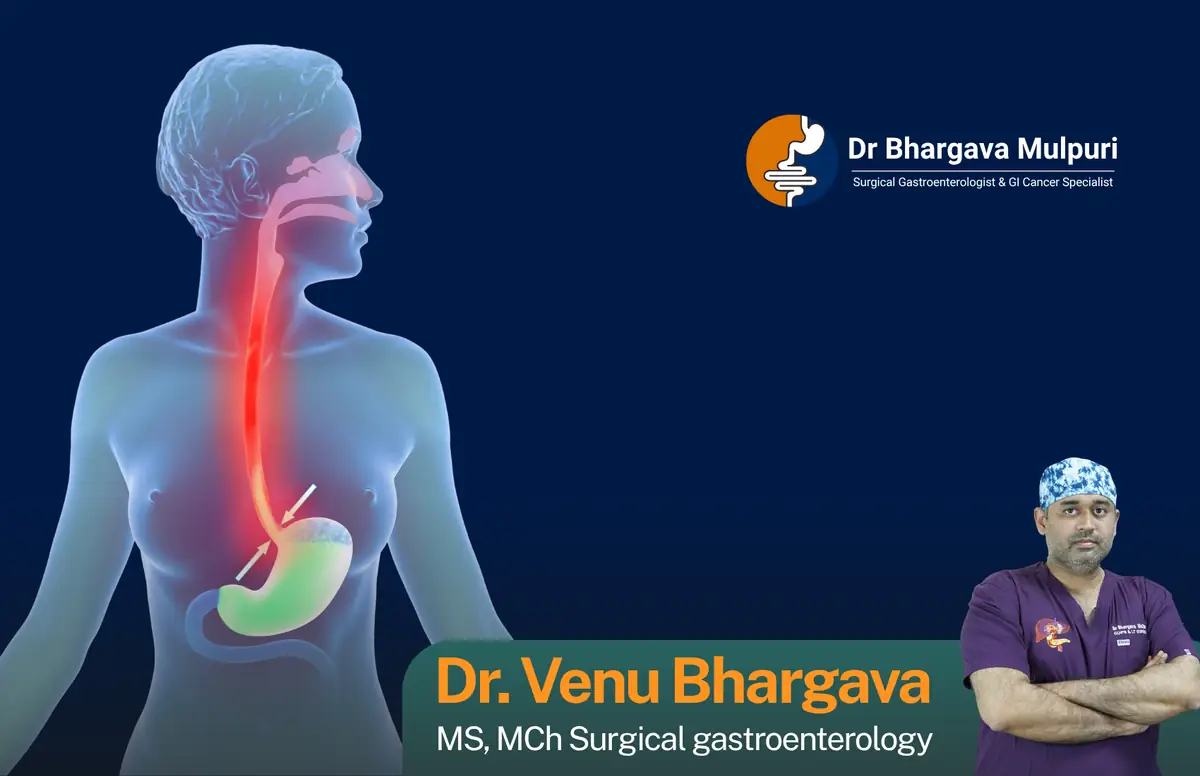
Diseases of the esophagus and stomach can quietly disrupt swallowing, nutrition, and comfort for years before patients receive the correct diagnosis. From heartburn that fails medical therapy to difficulty swallowing solids and liquids, chest discomfort, weight loss, and early satiety, upper gastrointestinal symptoms are common in Hyderabad's urban and referral populations yet they are not all alike. Some conditions need lifestyle and medicine alone; others require precise surgery to prevent complications, treat cancer, or restore normal passage of food. Dr. Venu Bhargava Mulpuri, MCh in Surgical Gastroenterology from PGIMER Chandigarh, provides comprehensive assessment and advanced operative care for esophageal and gastric disorders at KIMS Arete Hospital, Gachibowli, Hyderabad. With more than fifteen years of dedicated practice, performance of over twelve thousand procedures, and clinical responsibility for more than fifteen thousand patients, he offers the depth of training and volume that complex foregut surgery demands.
Who needs specialised esophageal and gastric surgical care? Adults with chronic gastroesophageal reflux disease who continue to have regurgitation, nocturnal cough, asthma-like symptoms, or erosive esophagitis despite prolonged acid suppression may be candidates for anti-reflux surgery after proper testing. Hiatus hernia-where the stomach slides into the chest through an enlarged opening in the diaphragm-can worsen reflux, cause anemia from occult bleeding, or lead to volvulus in severe cases. Achalasia presents with progressive difficulty swallowing both solids and liquids, regurgitation of undigested food, and chest pain due to failure of the lower esophageal sphincter to relax; surgical options such as Heller's myotomy are considered after endoscopic and manometric confirmation. Esophageal cancer remains a serious concern for patients with long-standing reflux, tobacco and alcohol use, or progressive dysphagia and weight loss; early endoscopic detection improves the chance of curative treatment. Gastric cancer may manifest as upper abdominal pain, fullness, anemia, or vomiting and requires staging and oncologic surgery when appropriate. Some patients need complex gastric resections after benign tumours, large ulcers, or post-treatment changes. Selectively, individuals with obesity-related metabolic disease may discuss bariatric and metabolic procedures when medical weight management and comorbidity control require surgical support-always after multidisciplinary assessment of suitability, expectations, and long-term follow-up. Chronic cough and dental erosion from nocturnal reflux, anemia from Cameron lesions associated with large hiatal hernias, and aspiration risk in elderly patients illustrate why foregut symptoms should not be dismissed as mere acidity. Young adults with long-duration GERD merit evaluation before irreversible Barrett's esophagus develops, because surveillance and intervention timing change once precancerous change is confirmed on biopsy.
Evaluation is structured to separate functional disorders from structural disease and cancer. Dr. Mulpuri begins with symptom chronology, medication use, prior endoscopy reports, and nutritional status. Upper gastrointestinal endoscopy is central: it visualises esophagitis, Barrett's change, hiatal anatomy, gastric ulcers, and masses, and allows biopsy when malignancy is suspected. Esophageal manometry and pH or impedance studies clarify achalasia subtypes and document reflux burden when surgery is planned for GERD or hiatus hernia. Cross-sectional imaging and endoscopic ultrasound support staging for esophageal and gastric cancers, including assessment of lymph nodes and local invasion. Basic blood work, anemia panels, and nutritional markers guide preoperative optimisation. For reflux surgery, correlation between symptoms, endoscopy, and physiology reduces unnecessary operations and identifies patients who benefit most from fundoplication and hernia repair. For cancer pathways, discussion in tumour board-style multidisciplinary planning-with medical oncology and radiology colleagues available within the KIMS Arete Hospital, Gachibowli ecosystem-helps align neoadjuvant therapy, surgery, and adjuvant plans with national guidelines adapted to each patient's fitness and preferences. Functional testing distinguishes achalasia from pseudo-achalasia related to tumours at the gastroesophageal junction, a distinction that must be made before Heller's myotomy. Patients travelling from Telangana towns and neighbouring states are encouraged to bring CD or digital copies of prior endoscopy video and pathology blocks when repeat biopsy is considered, so evaluation at Gachibowli proceeds efficiently without redundant procedures.
Treatment options span minimally invasive endoscopic and laparoscopic techniques to formal oncologic resections. For GERD and suitable hiatus hernia, laparoscopic fundoplication with crural repair can restore the anti-reflux barrier and anchor the gastroesophageal junction when anatomy permits; partial wraps may be chosen for patients with motility concerns. Large or recurrent hiatal hernias sometimes require mesh-augmented repair and careful attention to short esophagus scenarios-decisions best made by surgeons who regularly perform foregut surgery rather than occasional cases. Achalasia is often treated with laparoscopic Heller's myotomy combined with partial fundoplication to limit postoperative reflux while relieving obstruction; prior pneumatic dilation or endoscopic myotomy history is factored into the plan. Esophageal cancer management depends on stage: early lesions may be amenable to endoscopic or limited surgical approaches, while locally advanced disease may require neoadjuvant therapy followed by esophagectomy with reconstruction using stomach or colon conduit techniques when indicated. Gastric cancer surgery ranges from partial gastrectomy with lymphadenectomy to total gastrectomy for proximal or diffuse disease, always emphasising oncologic clearance and safe reconstruction for eating afterward. Complex gastric resections address benign but challenging pathology-large gastrointestinal stromal tumours, post-ulcer deformity, or revision after failed prior surgery. Selective bariatric and metabolic procedures, when appropriate after counselling, may include sleeve gastrectomy or gastric bypass pathways integrated with dietitian and physician follow-up; these are offered judiciously within a surgical gastroenterology practice focused on disease treatment rather than cosmetic weight loss alone. Esophageal cancer care may combine chemotherapy and radiation before surgery for selected stages, with honest discussion when cure is unlikely and palliation through stenting or feeding access is more appropriate. Gastric cancer operations respect lymph node basins relevant to tumour location; proximal tumours may require esophagogastric junction clearance, while distal cancers may be treated with subtotal gastrectomy when margins allow. Revision surgery after failed anti-reflux procedures is uncommon but requires a surgeon familiar with altered anatomy and mesh complications.
Why choose Dr. Venu Bhargava Mulpuri for esophagus and stomach surgery in Hyderabad? MCh training at PGIMER Chandigarh provides intensive exposure to esophageal resections, gastric oncology, and functional foregut operations in high-volume academic settings-background that matters when anatomy is distorted by prior inflammation, radiation, or emergency presentation. More than twelve thousand procedures and longitudinal care for more than fifteen thousand patients reflect technical repetition in laparoscopic anti-reflux surgery, Heller's myotomy, and major resections where complication rates fall when teams operate often. KIMS Arete Hospital, Gachibowli offers contemporary operating rooms, critical care support for major esophagectomy and gastrectomy, and coordinated access to endoscopy, imaging, and oncology services under one referral roof-important for Telangana patients who otherwise travel between multiple centres. Patients receive plain-language explanations of risks and benefits: when medical therapy should continue, when surgery is elective versus urgent, and how cancer staging changes the sequence of treatment. Referring gastroenterologists and physicians benefit from a surgeon who respects endoscopic findings, communicates operative findings back, and participates in long-term surveillance plans. Cultural dietary habits in South India-including spice, tea, and late meals-are discussed realistically when planning GERD surgery, because fundoplication supports but does not replace sensible eating patterns. More than fifteen years of experience means familiarity with both laparoscopic and open approaches when prior radiation, infection, or dense adhesions makes minimal access unsafe. Families appreciate direct answers about time off work, expected hospital stay, and when driving and lifting may resume after foregut operations.
Recovery and follow-up depend on the operation performed. After laparoscopic anti-reflux or hiatal hernia repair, many patients leave hospital within a few days, progress from liquids to soft diet over weeks, and are advised to avoid heavy lifting temporarily while tissues heal. Heller's myotomy patients need guidance on eating slowly and managing reflux symptoms with lifestyle and occasional medicines. Esophagectomy and gastrectomy require longer admission, jejunostomy or nasogastric feeding in selected cases, and gradual reintroduction of oral intake with dietitian support to prevent weight loss and dumping symptoms. Cancer survivors follow structured surveillance endoscopy and imaging schedules. All surgical patients are counselled on warning signs-inability to swallow liquids, fever, chest pain, or vomit with blood-that should trigger immediate contact. Follow-up visits assess wound healing, nutritional recovery, reflux control, and adjustment of acid suppression after fundoplication. Dr. Mulpuri emphasises continuity: foregut surgery is not only the day of operation but months of dietary adaptation and, for malignancy, years of coordinated oncology care. After Heller's myotomy, some patients need occasional endoscopic dilation for residual narrowing; knowing when symptoms warrant endoscopy versus routine clinic review prevents unnecessary worry. Hiatus hernia repair patients are taught that chronic straining, heavy weight gain, and poor wound healing can affect durability of repair, so postoperative guidance includes gentle return to exercise. Bariatric pathways, when selected, require vitamin monitoring and lifelong follow-up with surgical and medical teams-a commitment explained before consent.
When to seek consultation promptly? Do not ignore progressive difficulty swallowing, food sticking, or weight loss without evaluation-esophageal and gastric cancers often present subtly. Urgent assessment is warranted for vomiting blood, black stools, severe anemia, or inability to maintain hydration. Patients with GERD on long-term medicines who wish to stop therapy, young patients with severe reflux, or those with large hiatus hernia on imaging should discuss surgical options before complications such as stricture or Barrett's progression advance. Achalasia suspects with regurgitation and weight loss should be referred for manometry rather than repeated dilations without diagnosis. Gastric outlet obstruction, suspected perforation, and post-chemotherapy surgical questions need timely specialist input. Families across Hyderabad and Andhra Pradesh increasingly seek second opinions before major resection; bringing endoscopy reports, biopsy results, and imaging discs speeds meaningful consultation.
Esophagus and stomach surgical care at KIMS Arete Hospital, Gachibowli with Dr. Venu Bhargava Mulpuri integrates academic foregut training with high-volume community practice. Whether you face refractory GERD, symptomatic hiatus hernia, achalasia requiring Heller's myotomy, esophageal or gastric cancer needing complex resection, or selective metabolic surgery after thorough assessment, the pathway begins with accurate diagnosis, transparent choice among medical and surgical options, and operation tailored to your disease stage and fitness. Early specialist review preserves swallowing function, treats reflux before irreversible esophageal injury, and improves the odds of curative cancer surgery when disease is localised. Arrange consultation to review your endoscopy and scans, discuss laparoscopic and open approaches, and plan recovery and follow-up that supports lasting nutrition and quality of life.
Patients travel from Attapur, Upperpally, Mehdipatnam, Rajendranagar, Ameerpet, Banjara Hills, and across Telangana for esophagus & stomach care with Dr. Venu Bhargava Mulpuri at KIMS Arete Hospital, Gachibowli (PIN 500104).
Clinical focus
Which esophagus & stomach conditions need surgery?
Specialist evaluation and surgical care for the following esophagus & stomach conditions at KIMS Arete Hospital, Gachibowli.
01Esophageal cancer
Comprehensive management of esophageal cancer, including minimally invasive and open esophagectomy, ensuring complete tumour removal and improved survival.
02GERD (gastroesophageal reflux disease) surgery
Specialised surgical solutions for severe GERD cases unresponsive to medicines. Advanced anti-reflux procedures restore normal function and relieve long-term symptoms.
03Hiatus hernia repair
Expert in laparoscopic hiatus hernia repair in Hyderabad, offering safe, minimally invasive surgery to prevent acid reflux, chest discomfort, and complications.
04Achalasia cardia (Heller's myotomy)
Precise surgical treatment for achalasia cardia, using Heller's myotomy to relieve swallowing difficulties and restore normal esophageal function.
05Gastric cancer
Advanced surgical care for stomach cancer (gastric carcinoma), including gastrectomy and lymph node clearance, performed with precision for better recovery and survival.
06Complex gastric resections & reconstructions
Expertise in complex gastric resections and reconstructions, ensuring complete tumour removal while maintaining digestive continuity and function.
07Bariatric & metabolic procedures (selective)
Specialised bariatric and metabolic surgeries in Hyderabad for selected patients, addressing obesity and related conditions such as diabetes and hypertension.
What happens during your visit
Step-by-step care pathway in Hyderabad
From first consultation at KIMS Arete Hospital, Gachibowli to recovery follow-up - a clear pathway patients can expect.
- 1
Consultation
Meet Dr. Venu Bhargava Mulpuri at KIMS Arete Hospital, Gachibowli for history, examination, and a clear treatment plan.
- 2
Investigations
Blood tests, imaging (USG / CT / MRI / endoscopy as needed), and fitness assessment before any procedure.
- 3
Treatment discussion
Review laparoscopic vs open options, risks, expected hospital stay, and recovery timeline in plain language.
- 4
Procedure & hospital care
Surgery is performed with peri-operative monitoring and coordinated nursing care at KIMS Arete Hospital, Gachibowli.
- 5
Follow-up
Wound review, diet guidance, medicine titration, and long-term surveillance when cancer or transplant care applies.
Medically reviewed by
Dr. Venu Bhargava Mulpuri - MCh Surgical Gastroenterology
Surgical Gastroenterologist, HPB & Liver Transplant · 15+ years · KIMS Arete Hospital, Gachibowli
Authoritative references
Educational context draws on recognised public-health and medical research authorities.