
Overview
How does Dr. Bhargava Mulpuri treat pancreas conditions?
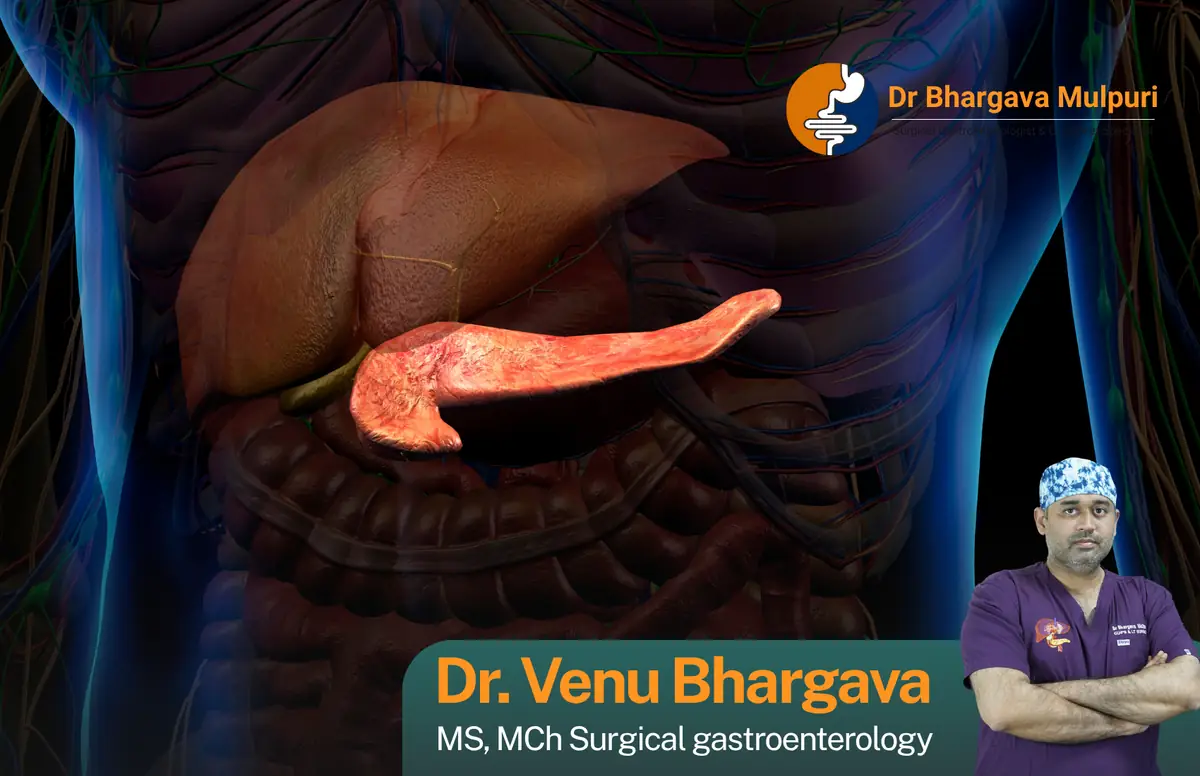
The pancreas sits deep in the abdomen, quietly producing enzymes for digestion and hormones such as insulin that regulate blood sugar. When this organ is affected by inflammation, cysts, or cancer, symptoms may be vague-back pain, weight loss, new-onset diabetes, or digestive upset-leading many patients in Hyderabad to delay specialist review until disease is advanced. Timely assessment by a pancreatic surgeon in Hyderabad can change that trajectory, offering clearer diagnosis, structured staging, and access to operations like Whipple's procedure when they are truly indicated.
Pancreatic ductal adenocarcinoma is the most common malignant tumour of the pancreas and one of the most challenging cancers to treat. Surgery offers the only chance of long-term cure for localised disease, but not every patient is a candidate at first presentation. Borderline or locally advanced tumours may need chemotherapy or radiation before resection; metastatic disease is managed primarily with systemic therapy and supportive care. Accurate imaging-multiphase CT, MRI, and sometimes endoscopic ultrasound with biopsy-defines vascular involvement and guides the multidisciplinary team. Families researching pancreatic surgeon Hyderabad options should look for experience in pancreatoduodenectomy (Whipple's), distal pancreatectomy, and central pancreatectomy, as well as honest discussion when surgery is not appropriate.
Cystic neoplasms of the pancreas are increasingly found on scans done for unrelated reasons. Intraductal papillary mucinous neoplasm (IPMN) may produce mucin and carry risk of progression to cancer; main-duct and mixed-type IPMNs often warrant surgical removal, while some branch-duct types can be watched with serial imaging. Mucinous cystic neoplasm (MCN) occurs mainly in women and typically requires resection because of malignant potential. Serous cystic neoplasm (SCN) is usually benign and may be observed unless symptomatic. Solid pseudopapillary neoplasm (SPEN), often seen in young women, is uncommon but should be resected because of low-grade malignant behaviour. Distinguishing these entities avoids unnecessary major surgery on one hand and prevents under-treatment on the other-a role where surgical gastroenterology expertise directly protects patients from both overtreatment and missed cancer.
Acute pancreatitis presents with severe upper abdominal pain, often radiating to the back, with nausea and elevated pancreatic enzymes. Most episodes related to gallstones or alcohol resolve with supportive care, but severe acute pancreatitis can threaten organ function and life. Necrosis, infected collections, and persistent organ failure may need step-up care including drainage procedures or delayed necrosectomy. Chronic pancreatitis results from repeated injury-alcohol, genetic factors, duct obstruction-leading to calcification, pain, malabsorption, and diabetes. Medical therapy, endoscopic duct drainage, and surgical options such as lateral pancreaticojejunostomy (Puestow procedure) or resection in selected cases aim to relieve pain and restore nutrition. Hyderabad patients with recurrent idiopathic pancreatitis should be evaluated for anatomical variants and duct stones, not only offered repeated pain relief.
Pseudocysts are fluid collections that may follow acute or chronic pancreatitis. Some resolve spontaneously; others cause pain, infection, or compression of stomach or bile duct and require drainage-endoscopic, radiologic, or surgical. Pancreatic trauma from accidents or assault may injure the duct and parenchyma; stable patients may be observed, while duct disruption often needs intervention to prevent fistulas and chronic leakage. Combined pancreatic and duodenal injury after high-impact trauma belongs in centres where emergency and elective pancreatic surgery are familiar daily work, not rare events.
Whipple's procedure (pancreaticoduodenectomy) removes the head of the pancreas, duodenum, part of the bile duct, and gallbladder, then reconstructs digestive continuity with pancreatic, biliary, and gastric anastomoses. It is the standard operation for tumours and selected benign or premalignant conditions in the pancreatic head and ampulla. Distal pancreatectomy removes the tail (often with spleen when vessels are involved) and suits distal cancers and many cystic tumours. Central pancreatectomy preserves more pancreatic tissue and may be chosen for small tumours in the neck or body when anatomy allows. Enucleation shells out a lesion while leaving most gland intact-appropriate only for carefully selected neuroendocrine tumours or benign lesions away from the main duct. Each approach demands meticulous technique to minimise pancreatic leak, bleeding, and delayed gastric emptying.
Who needs specialised pancreatic care? Individuals with a pancreatic mass or indeterminate cyst, repeated episodes of pancreatitis, chronic pain with imaging changes, jaundice with a pancreatic head lesion, or weight loss and new diabetes in mid to later life. Referral from gastroenterologists, physicians, or emergency teams after severe pancreatitis should prompt surgical input when complications arise. Those with family cancer syndromes or BRCA-related risk may need surveillance and early specialist advice. Young patients with SPEN or neuroendocrine tumours benefit from fertility-preserving and parenchyma-sparing strategies when oncologically sound.
Evaluation begins with history, examination, and review of prior scans and blood work. CA 19-9 and CEA may support-but never alone diagnose-malignancy. Endoscopic ultrasound fine-needle aspiration can confirm cancer or cyst type when imaging is unclear. Cardiorespiratory fitness and nutritional status influence anaesthetic risk and recovery. At KIMS Arete Hospital, Gachibowli, Hyderabad, pre-operative planning includes discussion of expected hospital course, possible ICU stay after major resection, and need for diabetes management or enzyme supplements afterward. ERCP or MRCP may map ductal anatomy before enucleation or chronic pancreatitis surgery.
Treatment is staged and individualised. Not every cyst needs immediate surgery; watchful waiting with strict follow-up intervals is valid for low-risk lesions. Acute pancreatitis management prioritises resuscitation and organ support before any operation. For resectable cancer, surgery is combined with oncology when guidelines recommend adjuvant chemotherapy. Palliative bypass or stenting may relieve jaundice when tumour is not removable. Dr. Venu Bhargava Mulpuri, MCh Surgical Gastroenterology (PGIMER Chandigarh), applies the rigour of tertiary centre training to each decision-balancing oncologic radicality with preservation of function whenever safely possible.
Why entrust complex pancreatic surgery to an experienced hepato-pancreato-biliary surgeon? Pancreatic operations are among the most demanding in general surgery: deep dissection near major vessels, delicate duct handling, and reconstruction that must heal under digestive secretions. A surgeon with more than fifteen years of experience and involvement in over twelve thousand procedures has refined judgement for when to operate, how to extend resection safely, and when to stop and pursue non-operative pathways. More than fifteen thousand patients cared for over a career translates into nuanced counselling-about Whipple's recovery, risks of diabetes and exocrine insufficiency, and realistic expectations after chronic pancreatitis surgery. For families comparing pancreatic surgeon Hyderabad profiles, operative volume and training pedigree remain meaningful signals alongside compassionate clinic communication.
Recovery after Whipple's or other pancreatic resections typically includes a hospital stay of one to two weeks for uncomplicated cases, longer if leak or infection occurs. Patients learn to monitor blood sugar, take pancreatic enzyme capsules with meals, and eat small frequent portions as appetite returns. Walking and breathing exercises reduce pulmonary complications. Follow-up visits track wound healing, nutritional weight, and-for cancer-oncology appointments for chemotherapy. Chronic pancreatitis operations aim for pain reduction over months, not always immediate relief. Pseudocyst and trauma pathways vary from outpatient drainage to staged open procedures. Home care instructions emphasise when to report fever, increasing pain, or inability to tolerate fluids.
Long-term follow-up for cystic neoplasms may extend for years with periodic MRI or CT to ensure no recurrence or new lesions. Cancer survivors need surveillance imaging and tumour markers as advised by the oncology team. Acute pancreatitis survivors should address gallstone disease, alcohol cessation, or metabolic factors to prevent relapse. Support for diabetes and malabsorption is part of comprehensive pancreatic care, not an afterthought. Patients who undergo distal pancreatectomy learn about splenic vaccination when spleen is removed, and about insulin adjustment when endocrine function declines.
When to seek consultation promptly: persistent jaundice, dark urine and pale stools, severe unrelenting epigastric or back pain, unexplained weight loss, a reported pancreatic cyst without a clear management plan, or acute pancreatitis with failing organ systems. Second opinions are reasonable when told surgery is impossible-anatomy and response to neoadjuvant therapy occasionally convert tumours to operable status. Early endoscopic or surgical consultation for IPMN with worrisome features prevents progression to invasive cancer when intervention is still curative.
Choosing care in Hyderabad means balancing expertise with accessibility for family support during prolonged recovery. KIMS Arete Hospital, Gachibowli offers a setting where complex pancreatic surgery can be discussed, planned, and performed with modern imaging, anaesthesia, and nursing support. From enucleation of a small neuroendocrine tumour to full Whipple's for pancreatic head cancer, from drainage of a painful pseudocyst to resection of a mucinous cystic neoplasm, the goal is the same: precise diagnosis, safe surgery when indicated, and partnership with you through recovery and follow-up. Search terms such as Whipple's surgery Hyderabad, pancreatic cancer surgeon, and IPMN treatment reflect real questions patients ask at midnight on their phones; they deserve answers grounded in MCh Surgical Gastroenterology training and sustained hepato-pancreato-biliary practice. Nutritional optimisation before major pancreatic resection-treating weight loss and vitamin deficiencies-can improve resilience during hospitalisation. Pain clinics and addiction medicine partners help chronic pancreatitis patients when surgery is not the immediate answer, keeping the surgical pathway open when anatomy later permits intervention.
Pancreatic disease rewards early engagement and punishes delay. Whether you face pancreatic cancer, a worrisome IPMN, recurrent pancreatitis, or post-traumatic complications, a dedicated surgical gastroenterology assessment clarifies the next step. Dr. Venu Bhargava Mulpuri combines MCh training from PGIMER Chandigarh with extensive hepato-pancreato-biliary practice, serving patients across Hyderabad and beyond who need a pancreatic surgeon they can trust for technical skill and straight talk-from first consultation through years of surveillance when watchful waiting is the wisest path.
Patients travel from Attapur, Upperpally, Mehdipatnam, Rajendranagar, Ameerpet, Banjara Hills, and across Telangana for pancreas care with Dr. Venu Bhargava Mulpuri at KIMS Arete Hospital, Gachibowli (PIN 500104).
Clinical focus
Which pancreas conditions need surgery?
Specialist evaluation and surgical care for the following pancreas conditions at KIMS Arete Hospital, Gachibowli.
01Pancreatic cancer (head, body, tail)
Comprehensive surgical care for pancreatic cancer, including tumours in the head, body, and tail. Advanced resections and Whipple's procedure in Hyderabad provide patients with a chance for cure and long-term survival.
02Cystic neoplasms (IPMN, MCN, SCN, SPEN)
Expert management of pancreatic cystic neoplasms such as IPMN, MCN, SCN, and SPEN. Each case is carefully evaluated to decide whether surgery, surveillance, or minimally invasive removal is needed.
03Acute and chronic pancreatitis
Comprehensive treatment for acute and chronic pancreatitis, including surgical interventions for pain relief, removal of damaged tissue, and prevention of long-term complications.
04Pancreatic pseudocysts & walled-off necrosis
Advanced management of pancreatic pseudocysts and walled-off necrosis using minimally invasive and open surgical techniques to ensure safe drainage and recovery.
05Pancreatic trauma
Emergency care for pancreatic injuries and trauma, ensuring timely surgical repair to prevent infections, bleeding, and long-term complications.
06Whipple's procedure (pancreaticoduodenectomy)
Specialised in performing Whipple's surgery in Hyderabad, one of the most complex procedures for pancreatic cancer and other head-of-pancreas conditions, with excellent outcomes.
07Distal & central pancreatectomy
Expertise in distal pancreatectomy and central pancreatectomy, performed for tumours and cysts, ensuring preservation of maximum healthy pancreatic tissue.
08Enucleation for benign pancreatic tumours
Safe and effective enucleation surgery for benign pancreatic tumours, preserving pancreatic function while removing growths with minimal risk.
What happens during your visit
Step-by-step care pathway in Hyderabad
From first consultation at KIMS Arete Hospital, Gachibowli to recovery follow-up - a clear pathway patients can expect.
- 1
Consultation
Meet Dr. Venu Bhargava Mulpuri at KIMS Arete Hospital, Gachibowli for history, examination, and a clear treatment plan.
- 2
Investigations
Blood tests, imaging (USG / CT / MRI / endoscopy as needed), and fitness assessment before any procedure.
- 3
Treatment discussion
Review laparoscopic vs open options, risks, expected hospital stay, and recovery timeline in plain language.
- 4
Procedure & hospital care
Surgery is performed with peri-operative monitoring and coordinated nursing care at KIMS Arete Hospital, Gachibowli.
- 5
Follow-up
Wound review, diet guidance, medicine titration, and long-term surveillance when cancer or transplant care applies.
Medically reviewed by
Dr. Venu Bhargava Mulpuri - MCh Surgical Gastroenterology
Surgical Gastroenterologist, HPB & Liver Transplant · 15+ years · KIMS Arete Hospital, Gachibowli
Authoritative references
Educational context draws on recognised public-health and medical research authorities.