Overview
How does Dr. Bhargava Mulpuri treat liver & transplant conditions?
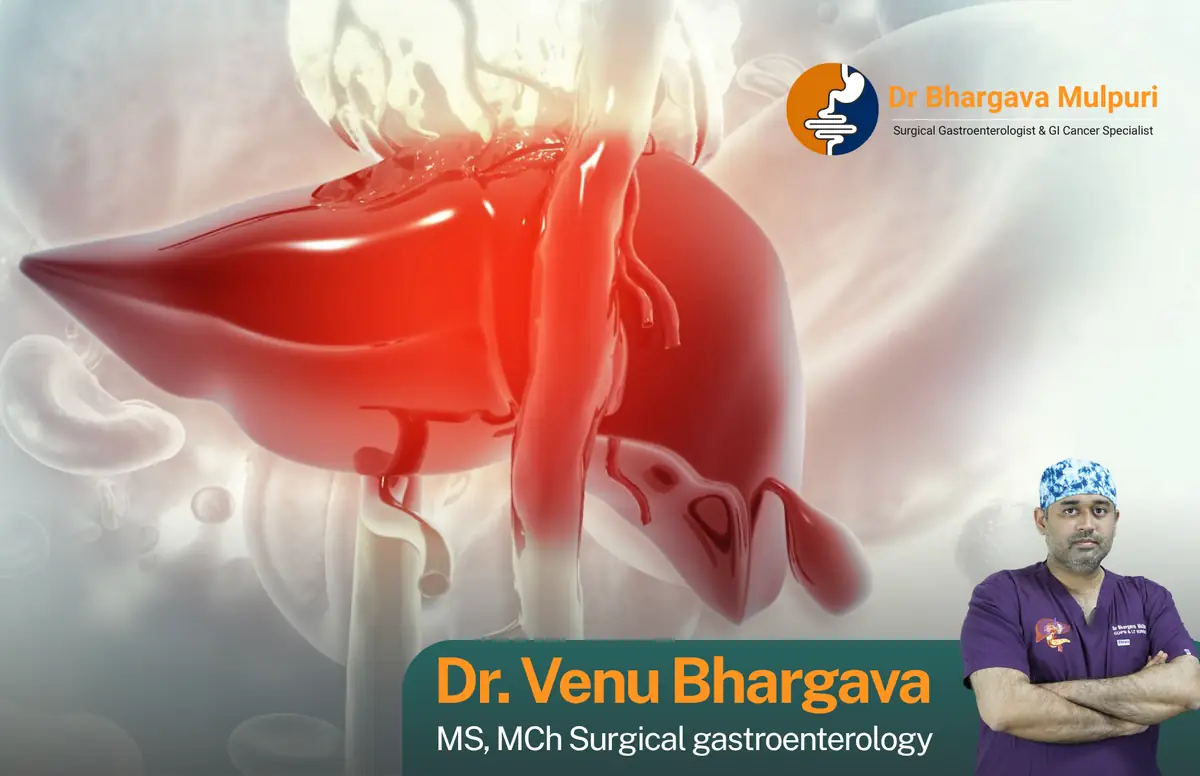
The liver is one of the most vital organs in the human body, performing hundreds of functions that sustain life-from filtering blood and metabolising nutrients to producing proteins essential for clotting and immunity. When liver disease progresses beyond what medicines and lifestyle changes can control, patients and families in Hyderabad often face complex decisions about surgery, transplantation, and long-term care. Understanding who needs specialised hepato-biliary care, how evaluation works, and what treatment paths exist can reduce fear and help you act at the right time.
Cirrhosis remains one of the most common reasons people seek advanced liver care. Long-standing damage from hepatitis B or C, alcohol-related liver disease, fatty liver with inflammation, autoimmune conditions, and other causes can lead to scarring that permanently changes liver architecture. Early cirrhosis may cause fatigue, mild swelling, or abnormal blood tests; advanced disease can bring jaundice, fluid in the abdomen (ascites), confusion (hepatic encephalopathy), bleeding from dilated veins in the oesophagus, and a higher risk of liver cancer. Not every patient with cirrhosis needs transplant immediately, but regular monitoring and timely referral to a liver transplant centre in Hyderabad can prevent crises and preserve options for the future.
Hepatocellular carcinoma (HCC), the most frequent primary liver cancer, often develops in a cirrhotic liver. Treatment depends on tumour size and number, how well the liver still functions, and the patient's overall health. Options may include loco-regional therapies, resection when the remaining liver is adequate, or transplantation when tumours meet strict criteria. Cholangiocarcinoma, a cancer arising from bile ducts inside or outside the liver, requires a different surgical and oncologic approach; major liver resections and sometimes combined liver–biliary procedures may be needed after careful staging. Benign liver tumours-such as haemangiomas, focal nodular hyperplasia, and adenomas-do not always require surgery, but growth, symptoms, uncertainty on imaging, or risk of rupture in certain adenomas may make resection the safest choice.
Major hepatectomies (removing one or more liver segments) demand precise planning because the liver regenerates but only if enough healthy tissue remains and blood inflow and outflow are preserved. Pre-operative assessment typically includes contrast-enhanced CT or MRI, liver function scores such as MELD or Child-Pugh classification, and sometimes portal vein embolisation to encourage growth of the future liver remnant. For patients in Telangana and across India, access to a surgeon trained in complex resections at a well-equipped hospital matters as much as the operation itself. Vascular reconstruction, biliary repair, and management of co-existing portal hypertension are part of advanced hepato-biliary practice, not occasional add-ons.
When the liver can no longer support life, liver transplantation offers the definitive treatment for end-stage liver disease and selected liver cancers. Living donor liver transplantation allows a healthy family member to donate a portion of their liver; both donor and recipient livers grow to functional size over weeks. Cadaveric (deceased donor) transplantation uses organs allocated through national and regional networks according to medical urgency and compatibility. Evaluation for transplant is thorough: blood tests, cardiac and pulmonary assessment, imaging, psychosocial review, and counselling about lifelong immunosuppression and follow-up. Families searching for liver transplant Hyderabad services benefit from a team that coordinates evaluation, listing, donor work-up, and post-transplant care under one roof rather than scattered appointments across multiple cities.
Acute and chronic liver trauma-from road accidents, falls, or penetrating injuries-may require emergency surgery to control bleeding, repair bile ducts, or remove devitalised tissue. Delayed complications such as bile leaks or strictures also need experienced hepato-biliary hands. Budd-Chiari syndrome, a rare condition where hepatic veins are blocked, causes painful enlargement of the liver, ascites, and progressive liver failure; treatment ranges from anticoagulation and interventional radiology to surgical shunts or transplant in severe cases. These conditions remind us that liver surgery is not only elective cancer work-it is also emergency and lifelong disease management.
Who should consider consultation with a surgical gastroenterologist focused on liver disease? Anyone with newly diagnosed cirrhosis, worsening jaundice or ascites, a liver mass found on ultrasound or scan, known HCC or cholangiocarcinoma, repeated hospitalisations for liver decompensation, or a family member willing to be assessed as a living donor. Patients previously told they are not operable may still deserve a second opinion when technology and surgical techniques have evolved. Early discussion does not commit you to surgery; it clarifies staging, prognosis, and the full menu of options including ablation, transarterial therapies, and transplant versus resection trade-offs.
Evaluation at a centre such as KIMS Arete Hospital, Gachibowli, Hyderabad typically begins with a detailed history and examination, review of prior reports, and targeted investigations. Cross-sectional imaging characterises tumours and vascular anatomy, including relationship to portal and hepatic veins. Tumour markers, viral hepatitis panels, and assessment of portal hypertension guide decisions. Endoscopic screening for varices and review of nutrition and muscle wasting complete the picture. Multidisciplinary input-from hepatology, oncology, radiology, anaesthesia, and nutrition-helps align surgery, transplant, or non-operative care with the patient's goals. Transparency about risks, expected hospital stay, and recovery timeline supports informed consent and family planning.
Treatment options are tailored, not one-size-fits-all. Medical and endoscopic therapy remains central for many with cirrhosis, including diuretics for ascites, beta-blockers and band ligation for varices, and lactulose or rifaximin for encephalopathy. Minimally invasive and open surgery coexist: the chosen technique depends on tumour location, liver reserve, and prior operations. For transplant candidates, synchronising donor evaluation, recipient optimisation, and ICU capability is critical. Dr. Venu Bhargava Mulpuri, MCh Surgical Gastroenterology (PGIMER Chandigarh), brings the discipline of high-volume tertiary training to each plan-emphasising safety, oncologic clearance where cancer is present, and preservation of as much healthy liver as possible.
Why choose an experienced hepato-pancreato-biliary surgeon for liver and transplant care? Liver operations carry meaningful blood loss risk, intricate anatomy, and little margin for error. A surgeon with more than fifteen years of experience and participation in over twelve thousand procedures has encountered variant anatomy, redo surgeries, and high-risk cases that textbooks alone cannot teach. Having cared for more than fifteen thousand patients, Dr. Mulpuri understands that technical success must be paired with clear communication-especially when explaining transplant listing, donor risks, and the months of follow-up ahead. For Hyderabad families, continuity with a named surgeon through clinic, operation, and ward rounds reduces the anxiety of handoffs between unfamiliar teams.
Recovery after major liver surgery or transplant varies. Hospital stays may range from several days after a segmentectomy to two weeks or more after transplant, depending on complications and overall health. Pain control, early mobilisation, and gradual return to a protein-appropriate diet are standard milestones. Transplant recipients begin immunosuppressive medicines to prevent rejection and require frequent blood tests initially, then lifelong surveillance. Signs that warrant urgent contact include fever, yellowing of eyes, severe abdominal pain, reduced urine output, or confusion. Scheduled follow-up visits monitor liver function, imaging for cancer recurrence in oncology cases, and adjustment of medicines. Return to work and driving follows individual clearance once energy and wound healing allow.
Long-term follow-up for cirrhosis-even without transplant-includes screening for HCC with periodic ultrasound and alpha-fetoprotein, management of ascites and encephalopathy, and vaccination and lifestyle guidance including alcohol abstinence and metabolic control. For cancer survivors, coordinated care with medical oncology and radiation oncology when needed improves outcomes. Families in Hyderabad appreciate care close to home at KIMS Arete Hospital, Gachibowli, reducing the burden of travel while still accessing operation theatres and ICU standards suited to major hepato-biliary work. Dieticians and physiotherapists often play a quiet but important role in rebuilding strength after prolonged illness.
When to seek consultation without delay: sudden severe abdominal swelling or pain, vomiting blood or black stools, new or rapidly growing liver lesion, unexplained weight loss with jaundice, or referral from a gastroenterologist for transplant assessment. For living donor inquiries, early vascular imaging and psychological readiness assessment prevent last-minute delays when the recipient's condition deteriorates. International patients and NRIs visiting Hyderabad for family consultations can often consolidate imaging review and surgical opinion into structured visit plans when records are shared in advance.
Liver and transplant surgery is not only about removing disease-it is about restoring quality of life, buying years for children and parents, and offering hope when the liver's reserve is nearly exhausted. Whether your need is cancer resection, benign tumour surgery, trauma repair, Budd-Chiari management, or full transplantation from living or cadaveric donation, starting with an expert surgical evaluation in Hyderabad sets the direction for everything that follows. Keywords that bring patients to this page-liver transplant Hyderabad, liver cancer surgery, cholangiocarcinoma treatment, living donor liver transplant-reflect real journeys of fear, research, and hope. Insurance and medico-legal documentation for transplant listing can feel overwhelming; a team that explains each form and timeline reduces stress for donors and recipients alike. Paediatric and adult liver conditions differ in causes and urgency, yet the principle remains the same: match the intensity of treatment to the stage of disease and the person's life context.
Dr. Venu Bhargava Mulpuri welcomes patients who need honest answers, careful planning, and surgical care grounded in MCh training from PGIMER Chandigarh and years of dedicated hepato-pancreato-biliary practice at KIMS Arete Hospital, Gachibowli, Hyderabad. Booking a consultation is the first step toward clarity-whether your scan showed an incidental nodule, your gastroenterologist advised transplant discussion, or you are exploring living donation for a loved one with end-stage liver disease.
Patients travel from Attapur, Upperpally, Mehdipatnam, Rajendranagar, Ameerpet, Banjara Hills, and across Telangana for liver & transplant care with Dr. Venu Bhargava Mulpuri at KIMS Arete Hospital, Gachibowli (PIN 500104).
Clinical focus
Which liver & transplant conditions need surgery?
Specialist evaluation and surgical care for the following liver & transplant conditions at KIMS Arete Hospital, Gachibowli.
01Liver cirrhosis (alcoholic, viral, NASH-related)
Comprehensive treatment for liver cirrhosis caused by alcohol, hepatitis infections, or fatty liver (NASH). Advanced evaluation and personalised care plans, including liver transplantation in Hyderabad, are offered for patients with end-stage disease.
02Hepatocellular carcinoma (HCC)
Expert surgical solutions for liver cancer (HCC), including major resections and transplantation. Dr. Bhargava combines advanced technology with multidisciplinary care, making him a preferred choice for liver cancer surgery in Hyderabad.
03Cholangiocarcinoma
Specialised care for bile duct cancer (cholangiocarcinoma) with precise surgical resections and transplant options. Focused on complete tumour removal and long-term disease management.
04Benign liver tumours (adenoma, hemangioma, FNH)
Safe management of benign liver tumours like adenomas, hemangiomas, and focal nodular hyperplasia. Minimally invasive surgery ensures faster recovery and reduced complications.
05Major liver resections
Advanced surgical expertise in right hepatectomy, left hepatectomy, and central hepatectomy for complete tumour clearance while preserving healthy liver tissue.
06Living donor & cadaveric liver transplantation
Trusted for both living donor liver transplants and cadaveric liver transplants in Hyderabad, Dr. Bhargava offers life-saving procedures for patients with severe liver failure.
07Liver trauma & complex resections
Emergency and complex surgical care for liver trauma, ensuring rapid intervention with advanced techniques that minimise complications.
08Budd–Chiari syndrome
Specialised management of Budd–Chiari syndrome using surgery and transplantation to restore liver function and prevent long-term damage.
What happens during your visit
Step-by-step care pathway in Hyderabad
From first consultation at KIMS Arete Hospital, Gachibowli to recovery follow-up - a clear pathway patients can expect.
- 1
Consultation
Meet Dr. Venu Bhargava Mulpuri at KIMS Arete Hospital, Gachibowli for history, examination, and a clear treatment plan.
- 2
Investigations
Blood tests, imaging (USG / CT / MRI / endoscopy as needed), and fitness assessment before any procedure.
- 3
Treatment discussion
Review laparoscopic vs open options, risks, expected hospital stay, and recovery timeline in plain language.
- 4
Procedure & hospital care
Surgery is performed with peri-operative monitoring and coordinated nursing care at KIMS Arete Hospital, Gachibowli.
- 5
Follow-up
Wound review, diet guidance, medicine titration, and long-term surveillance when cancer or transplant care applies.
Medically reviewed by
Dr. Venu Bhargava Mulpuri - MCh Surgical Gastroenterology
Surgical Gastroenterologist, HPB & Liver Transplant · 15+ years · KIMS Arete Hospital, Gachibowli
Authoritative references
Educational context draws on recognised public-health and medical research authorities.