
Overview
How does Dr. Bhargava Mulpuri treat gallbladder & biliary tract conditions?
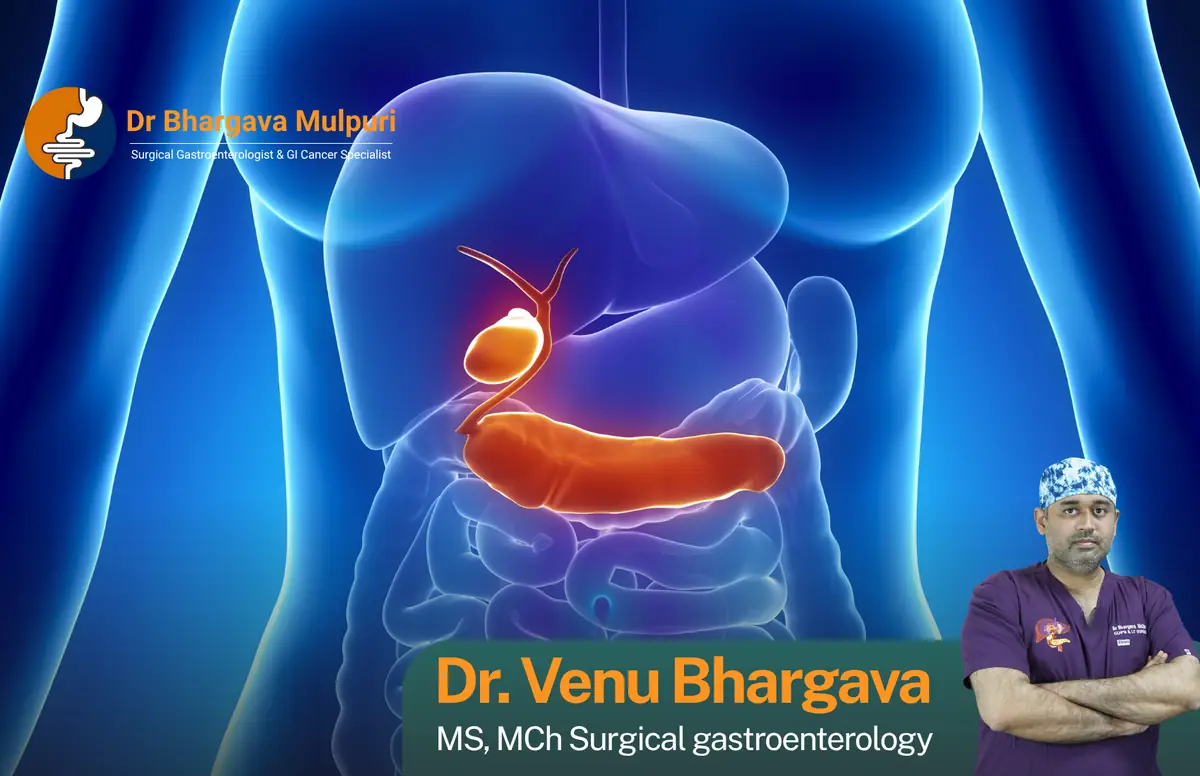
Gallbladder and biliary tract disorders are among the most common reasons patients in Hyderabad and across India seek specialist surgical care. From painful gallstones and blocked bile ducts to rare bile duct injuries after prior surgery and complex cancers, these conditions affect digestion, nutrition, and overall quality of life when they are left untreated or managed without the right expertise. Dr. Venu Bhargava Mulpuri, MCh in Surgical Gastroenterology from PGIMER Chandigarh, offers comprehensive evaluation and advanced operative treatment for gallbladder and biliary diseases at KIMS Arete Hospital, Gachibowli, Hyderabad. With more than fifteen years of focused experience, over twelve thousand procedures, and care delivered to more than fifteen thousand patients, his practice combines academic training from one of India's premier institutes with practical, patient-centred decision-making suited to local needs and referral patterns.
Understanding who needs specialised biliary care is the first step toward timely relief. Many adults present with upper abdominal pain, nausea, bloating, or pain after fatty meals-the classic pattern associated with gallstones, also called cholelithiasis. Some patients discover stones incidentally on ultrasound during health checks; others arrive in emergency settings with severe pain, fever, or jaundice when a stone has migrated into the common bile duct, a condition known as choledocholithiasis. Patients with persistent jaundice, dark urine, pale stools, unexplained weight loss, or a newly detected mass in the gallbladder region require urgent specialist assessment because gallbladder carcinoma and other biliary malignancies can mimic benign disease early on. Individuals who have already undergone cholecystectomy elsewhere but continue to have bile leaks, strictures, or recurrent cholangitis may be living with post-cholecystectomy bile duct injury or narrowing of the duct-situations that demand reconstructive biliary surgery rather than repeated temporary stenting alone. In selected paediatric cases, biliary atresia and related obstructive conditions in infants and children also fall within the spectrum of complex biliary care when families seek experienced surgical gastroenterology input for diagnosis, timing of intervention, and coordination with paediatric teams. Women of reproductive age, patients with diabetes, and those with rapid weight loss may have higher stone risk; however, the decision to operate is based on symptoms and complications rather than stone size alone. Silent stones found on routine scans deserve counselling about when expectant management is safe versus when pain episodes or duct blockage make surgery advisable.
Evaluation begins with a careful clinical history and examination, because biliary symptoms overlap with gastric, pancreatic, and liver disease. Dr. Mulpuri emphasises correlating pain character, fever, jaundice, and prior surgical records before planning any intervention. Baseline blood tests assess liver function, bilirubin, and markers of inflammation or obstruction. Ultrasound remains the first-line imaging for gallstones and gallbladder wall changes in most Hyderabad clinics and hospitals. When duct stones, strictures, or suspected cancer are in question, magnetic resonance cholangiopancreatography and high-quality cross-sectional imaging help map the biliary tree without unnecessary invasive steps. Endoscopic ultrasound and endoscopic retrograde cholangiopancreatography may be discussed when stones in the common bile duct need removal before or in coordination with surgery, or when tissue sampling is required for strictures. For post-cholecystectomy injuries and planned reconstructions, detailed review of operative notes, prior imaging, and timing of the original surgery is essential to choose between early repair, staged drainage, and definitive hepaticojejunostomy or biliary bypass. This structured workup reduces repeat procedures, clarifies whether minimally invasive laparoscopic surgery is safe, and identifies patients who need open or hybrid approaches from the outset. At KIMS Arete Hospital, Gachibowli, reports from outside centres are reviewed so patients need not repeat every test; when fresh imaging is required, the rationale is explained to avoid unnecessary expense and delay. Preoperative optimisation for jaundiced or malnourished patients may include short-term drainage, correction of clotting abnormalities, and treatment of cholangitis before definitive reconstruction, because operating during uncontrolled infection increases risk for hepaticojejunostomy and bypass procedures.
Treatment options are tailored to the diagnosis, not to a one-size-fits-all protocol. For uncomplicated symptomatic gallstones, laparoscopic cholecystectomy remains the standard of care when inflammation is controlled and anatomy is favourable-offering smaller incisions, quicker return to routine activity, and durable relief when performed by an experienced surgeon. Acute cholecystitis and complex gallbladder disease may still be managed laparoscopically in many cases, though severe adhesions, gangrene, or uncertainty about malignancy can require conversion to open surgery for safety and complete removal. Choledocholithiasis is often managed in a combined manner: endoscopic clearance of duct stones when appropriate, followed by cholecystectomy to prevent recurrence. When endoscopic access is difficult or stones are large and impacted, surgical exploration of the bile duct may be indicated. Gallbladder carcinoma and selected biliary tract cancers require oncologic principles-adequate resection margins, lymph node assessment where indicated, and coordination with medical oncology and radiology teams at KIMS Arete Hospital, Gachibowli. Post-cholecystectomy bile duct injuries and benign strictures frequently need specialised reconstruction, including hepaticojejunostomy to restore bile flow to the intestine and biliary bypass procedures when long segments are damaged or narrowed. These operations are technically demanding and benefit from a surgeon who regularly performs advanced hepatobiliary work rather than occasional referral cases. For selected paediatric presentations such as biliary atresia, early referral and staged surgical plans aligned with paediatric hepatology remain critical; families are counselled honestly about goals, limitations, and long-term liver health. Choledocholithiasis plans are discussed stepwise: clearing the duct to relieve jaundice and infection, then removing the gallbladder so stones do not form again. When gallbladder carcinoma is suspected, extended cholecystectomy and portal lymph node clearance may be part of the discussion, with honest staging if disease has spread beyond curative intent. Post-cholecystectomy strictures from clips, thermal injury, or ischaemia are not identical to congenital problems; each requires individual mapping of the biliary tree before committing to hepaticojejunostomy or multi-segment biliary bypass.
Why choose this surgeon for gallbladder and biliary disease in Hyderabad? Surgical gastroenterology training at PGIMER Chandigarh reflects rigorous exposure to complex biliary reconstruction, trauma to the bile ducts, and multidisciplinary liver and biliary oncology-experience that translates into safer decision-making in the operating room. Dr. Venu Bhargava Mulpuri's track record of more than twelve thousand procedures and follow-up across more than fifteen thousand patients reflects breadth across emergency gallbladder surgery, elective stone disease, and redo biliary operations that many general surgeons prefer not to undertake alone. At KIMS Arete Hospital, Gachibowli, patients access modern operating facilities, anaesthesia support, and inpatient care pathways suited to both day-case cholecystectomy and prolonged recovery after major resection or reconstruction. Communication in clear terms-explaining when watchful waiting is reasonable, when antibiotics and drainage buy time, and when surgery should not be delayed-helps families from Telangana and neighbouring states make informed choices. Referring physicians often value a single point of contact who can integrate endoscopic, radiologic, and surgical plans without fragmented care. Hyderabad patients often balance work and caregiving responsibilities; scheduling transparently distinguishes true emergencies from elective windows so families can plan leave and travel from districts outside the city. Insurance and cashless pathways at KIMS Arete Hospital are navigated with hospital coordinators while clinical decisions remain independent of payment mode. Second opinions for complex biliary reconstruction are welcomed when prior records and imaging are available, because understanding what happened during the first operation often determines whether early repair or staged approach is safer.
Recovery and follow-up vary by procedure. After uncomplicated laparoscopic cholecystectomy, many patients resume light activity within days and normal diet progression over one to two weeks, with instructions to report fever, worsening pain, or jaundice immediately. Duct explorations, repairs after injury, and cancer operations involve longer hospital stays, drains when needed, and staged imaging to confirm bile flow and healing. Long-term follow-up after biliary bypass or hepaticojejunostomy includes monitoring liver tests, nutritional support when fat absorption is affected, and surveillance for stricture recurrence or cholangitis. Patients who have had malignancy undergo structured oncology follow-up as per tumour board recommendations. Dr. Mulpuri's team stresses wound care, deep breathing and mobility after major abdominal surgery, and timely review appointments so small problems are addressed before they become emergencies. After hepaticojejunostomy, patients learn signs of cholangitis and the importance of completing prescribed antibiotics and attending duct imaging when ordered. Diet after gallbladder removal is usually liberal, though some people notice temporary intolerance to very fatty meals; persistent diarrhea or pain warrants review rather than self-diagnosis. Cancer survivors receive guidance on nutrition, pain control, and when to return for oncology alongside surgical follow-up.
When should you seek consultation without delay? Seek urgent care for high fever with jaundice, persistent vomiting, severe upper abdominal pain unrelieved by medication, or confusion and dehydration in elderly patients. Schedule a specialist appointment for recurrent colicky pain after meals, repeated episodes labelled as gastritis without improvement, abnormal liver tests, or ultrasound reports mentioning gallstones, polyps, wall thickening, or dilated bile ducts. If you had gallbladder surgery elsewhere and now have recurrent pain, fevers, or jaundice, request referral for biliary imaging and surgical opinion early-delayed recognition of duct injury or stricture can complicate repair. Families of infants with persistent jaundice beyond the newborn period should discuss biliary atresia screening pathways with paediatricians and surgical specialists. For gallbladder masses or suspicious imaging, do not postpone evaluation while treating only as infection.
Choosing advanced gallbladder and biliary tract care at KIMS Arete Hospital, Gachibowli under Dr. Venu Bhargava Mulpuri means pairing Hyderabad's growing need for accessible specialist surgery with training rooted in one of India's leading postgraduate institutes. Whether your concern is straightforward gallstones, a stone stuck in the common bile duct, cancer involving the gallbladder, a bile duct injured during prior surgery, a stricture requiring hepaticojejunostomy, or selected paediatric biliary obstruction, thorough evaluation, honest counselling, and operation plans matched to your anatomy and goals remain the foundation of care. Early consultation often preserves simpler treatment options; delayed presentation can turn a manageable cholecystectomy into emergency surgery or a temporary fix into permanent damage. Contact the clinic to arrange review of your reports, discuss laparoscopic or open options, and build a follow-up plan that supports safe recovery and long-term digestive health.
Patients travel from Attapur, Upperpally, Mehdipatnam, Rajendranagar, Ameerpet, Banjara Hills, and across Telangana for gallbladder & biliary tract care with Dr. Venu Bhargava Mulpuri at KIMS Arete Hospital, Gachibowli (PIN 500104).
Clinical focus
Which gallbladder & biliary tract conditions need surgery?
Specialist evaluation and surgical care for the following gallbladder & biliary tract conditions at KIMS Arete Hospital, Gachibowli.
01Gallstones & cholelithiasis
Expert management of gallstones and cholelithiasis, including minimally invasive laparoscopic cholecystectomy in Hyderabad. Quick recovery, minimal pain, and reduced complications.
02Choledocholithiasis (common bile duct stones)
Advanced treatment for common bile duct stones, including endoscopic and surgical removal to relieve pain, jaundice, and infection risk.
03Gallbladder carcinoma
Comprehensive care for gallbladder cancer, with expertise in early detection, staging, and advanced surgical resection for improved survival outcomes.
04Post-cholecystectomy bile duct injuries
Specialised corrective surgery for bile duct injuries that occur after gallbladder removal, restoring bile flow and preventing long-term complications.
05Strictures of bile duct (benign & malignant)
Expert surgical management of bile duct strictures, whether caused by cancer or benign conditions, using advanced reconstructions and bypass procedures.
06Biliary atresia (selected paediatric cases)
Specialised surgical intervention for biliary atresia in selected paediatric cases, restoring bile flow and preventing progression to liver failure.
07Hepaticojejunostomy / biliary bypass procedures
Precise surgical creation of hepaticojejunostomy or biliary bypass to treat strictures, injuries, or advanced biliary cancers, ensuring effective long-term outcomes.
What happens during your visit
Step-by-step care pathway in Hyderabad
From first consultation at KIMS Arete Hospital, Gachibowli to recovery follow-up - a clear pathway patients can expect.
- 1
Consultation
Meet Dr. Venu Bhargava Mulpuri at KIMS Arete Hospital, Gachibowli for history, examination, and a clear treatment plan.
- 2
Investigations
Blood tests, imaging (USG / CT / MRI / endoscopy as needed), and fitness assessment before any procedure.
- 3
Treatment discussion
Review laparoscopic vs open options, risks, expected hospital stay, and recovery timeline in plain language.
- 4
Procedure & hospital care
Surgery is performed with peri-operative monitoring and coordinated nursing care at KIMS Arete Hospital, Gachibowli.
- 5
Follow-up
Wound review, diet guidance, medicine titration, and long-term surveillance when cancer or transplant care applies.
Medically reviewed by
Dr. Venu Bhargava Mulpuri - MCh Surgical Gastroenterology
Surgical Gastroenterologist, HPB & Liver Transplant · 15+ years · KIMS Arete Hospital, Gachibowli
Authoritative references
Educational context draws on recognised public-health and medical research authorities.