
Overview
How does Dr. Bhargava Mulpuri treat hernia & abdominal wall conditions?
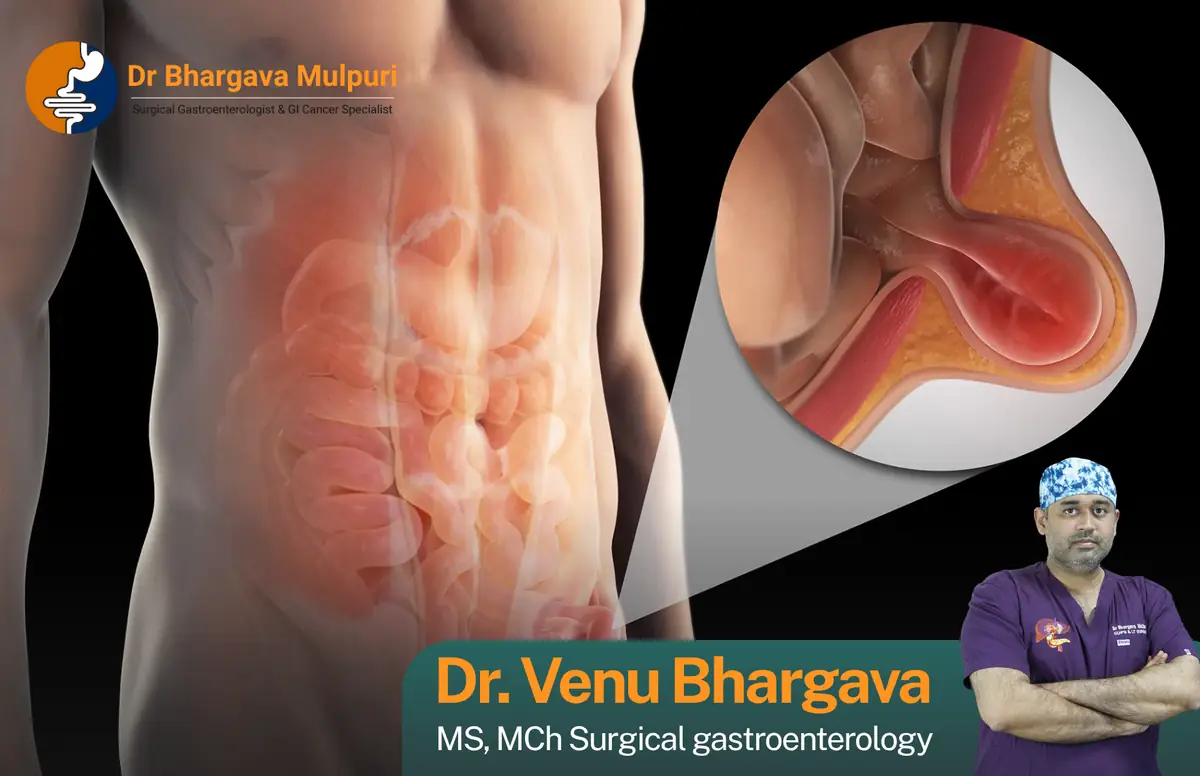
A hernia occurs when tissue or intestine pushes through a weak point in the abdominal wall, creating a bulge that may ache, enlarge, or become impossible to push back. While some hernias remain quiet for years, others progress to incarceration or strangulation, a surgical emergency that threatens bowel viability. In Hyderabad's busy urban life, many people tolerate groin discomfort or a navel lump until pain escalates or work and travel become difficult. Hernia and abdominal wall surgery addresses inguinal and femoral defects in men and women, umbilical and epigastric gaps, incisional hernias after prior operations, and complex recurrent failures where mesh and anatomy demand advanced planning. Dr. Venu Bhargava Mulpuri, MCh Surgical Gastroenterology from PGIMER Chandigarh, evaluates and treats abdominal wall disorders at KIMS Arete Hospital, Gachibowli, Hyderabad. Backed by more than fifteen years of experience, over twelve thousand procedures, and longitudinal care of more than fifteen thousand patients, he combines minimally invasive laparoscopic techniques with open and component separation methods when simplicity alone is not enough.
Who needs hernia care? Any adult with a persistent groin or thigh bulge, especially one that appears on coughing or straining, should receive specialist assessment. Umbilical hernias in adults do not spontaneously close; enlargement and skin changes signal rising risk. Epigastric hernias between the breastbone and navel may contain fat or bowel and cause vague upper abdominal pain mistaken for acidity. Incisional hernias develop along old surgical scars from gallbladder, caesarean, appendectomy, or major bowel surgery, and can widen until cosmesis, pain, and bowel obstruction become dominant concerns. Patients with connective tissue disorders, chronic cough, prostate disease causing straining, obesity, or occupations involving heavy lifting carry higher recurrence risk without proper repair. Recurrent hernias after previous mesh, infection, or suture-only repair belong to a subgroup requiring imaging, often ultrasound or CT, to map defect size and content before choosing technique. Children are excluded from this adult-focused discussion, but family members noticing similar bulges should be screened because hernia predisposition can cluster.
Inguinal hernia is the most common abdominal wall defect in men, presenting as groin swelling that may descend toward the scrotum. Indirect hernias follow the spermatic cord pathway; direct hernias push through the posterior wall of the inguinal canal. Both require durable closure of the defect with mesh in most adult cases because tissue-only repair carries higher failure rates under modern activity expectations. Femoral hernias, more frequent in women, have narrower necks and higher strangulation risk, often mandating prompt surgery even when symptoms seem mild. Laparoscopic totally extraperitoneal (TEP) or transabdominal preperitoneal (TAPP) repairs allow mesh placement across the myopectineal orifice with smaller incisions and quicker return to desk jobs for suitable candidates. Open Lichtenstein repair remains excellent for many patients, especially when general anaesthesia risk, prior pelvic surgery, or very large scrotal extensions favour a groin incision approach. Dr. Mulpuri selects technique based on defect type, body habitus, prior operations, and patient goals rather than applying one method universally.
Umbilical and epigastric hernias affect the midline fascia. Small umbilical defects in slim adults may be repaired with suture techniques, but larger gaps and epigastric swiss-cheese defects typically need mesh reinforcement to withstand intra-abdominal pressure from cough, constipation, and core muscle use. Cosmetic concerns matter; incisions are planned to hide within the navel where laparoscopic intraperitoneal onlay mesh (IPOM) or open sublay techniques allow. Concurrent diastasis recti, separation of rectus muscles without a true fascial hole, may be addressed during the same consultation when bulging impairs confidence or core stability, though functional repair differs from true hernia and is discussed honestly. Patients planning pregnancy after umbilical repair receive timing advice because intra-abdominal pressure in later trimesters stresses fresh repairs; elective surgery is often scheduled between pregnancies when feasible.
Incisional and ventral hernias represent some of the most technically demanding abdominal wall work. Scar tissue, loss of domain when bowel sits within the hernia sac, and prior mesh infection create hostile fields. CT scan with Valsalva manoeuvre or physical exam in standing position estimates width and location relative to costal margin and pelvis. Small defects may close laparoscopically with mesh underlay and adequate overlap. Medium defects benefit from retromuscular or preperitoneal mesh placement with fixation strategies that reduce chronic pain from tackers. Giant hernias wider than ten centimetres or with contaminated fields may need staged procedures, progressive pneumoperitoneum, or anterior component separation and transversus abdominis release (TAR) to achieve tension-free closure without compromising respiratory mechanics. Recurrence after multiple attempts requires frank discussion of goals: definitive repair versus palliative support garment versus acceptance of low-risk watchful waiting in frail patients.
Complex and recurrent hernias often arrive after mesh removal for infection, chronic pain, or migration. Biofilm on old mesh makes simple reinsertion risky; multidisciplinary planning clears infection, optimises nutrition and glycaemic control in diabetics, and selects mesh type, synthetic, composite with anti-adhesion layer, or biological scaffold, in contaminated or clean-contaminated fields. Parastomal hernias beside colostomy or ileostomy appliances frustrate bag adhesion and leak; repair options include local mesh, stoma relocation, or component separation tailored to stoma site and patient prognosis. Spigelian hernias along the semilunar line, lumbar hernias, and obturator hernias are rare but classic examination pitfalls; imaging clarifies when vague lateral abdominal pain persists. Sportsman's hernia or athletic pubalgia overlaps with groin pain syndromes; careful differentiation prevents unnecessary mesh in non-hernia pain while ensuring true defects are not missed.
Evaluation at consultation includes standing and supine examination, cough impulse testing, and assessment of reducibility and tenderness suggesting incarceration. Groin ultrasound helps when body habitus obscures anatomy or when occult hernia is suspected in athletes with normal resting exam. CT delineates multi-defect ventral hernias and intra-abdominal pathology mimicking hernia such as lipoma, lymph node mass, or psoas abscess. Blood tests are routine preoperative screening; anaemia and uncontrolled diabetes are corrected to reduce wound complications. Anaesthesia review addresses cardiac and respiratory comorbidities common in middle-aged Hyderabad patients returning for second hernia repairs decades after the first. Patients receive written instructions on holding anticoagulants, managing diabetes medications on surgery day, and showering with antiseptic soap to lower surgical site infection risk.
Minimally invasive laparoscopic hernia surgery is a cornerstone of modern care when patient selection is appropriate. Benefits include reduced postoperative pain for many inguinal and ventral repairs, faster return to office work, and mesh placement in preperitoneal planes with broad coverage of potential secondary defects. Laparoscopy demands expertise in managing intraoperative complications such as bladder or bowel injury during adhesiolysis in ventral cases; this is why high-volume abdominal wall surgeons achieve smoother outcomes. Not every patient is a laparoscopic candidate: prior extensive midline surgery with dense adhesions, strangulated bowel requiring resection, or inability to tolerate pneumoperitoneum may shift plans to open repair without compromising quality. Dr. Venu Bhargava Mulpuri discusses these trade-offs explicitly so expectations align with the chosen approach. Same-day discharge is common for uncomplicated inguinal laparoscopic repair; larger ventral cases may need short hospital observation for pain control and ileus monitoring.
Why choose this surgeon for hernia and abdominal wall disease? Hernia repair is sometimes treated as a minor procedure, yet recurrence, chronic pain, and mesh infection can transform a simple bulge into years of disability. Specialist training in surgical gastroenterology from PGIMER Chandigarh equips Dr. Mulpuri to handle bowel within hernia sacs, resect ischemic segments when strangulation occurred, and manage contaminated fields. Volume matters: experience from more than twelve thousand procedures informs mesh overlap, nerve-sparing fixation, and groin repair details. Care of more than fifteen thousand patients reflects follow-through for wound checks and revision planning when needed. Patients in Hyderabad benefit from KIMS Arete Hospital, Gachibowli, with teams accustomed to day-care hernia surgery and complex abdominal wall reconstruction.
Recovery after hernia surgery varies by defect size and approach. Inguinal laparoscopic patients often walk within hours, resume light activity in days, and avoid heavy lifting for several weeks as mesh incorporates into tissue. Open groin repair may produce more immediate groin stiffness; gradual stretching and prescribed analgesics prevent chronic pain cycles from guarded posture. Ventral hernia recovery includes abdominal binder use in some protocols, pulmonary toilet to prevent atelectasis after long operations, and early mobilisation despite discomfort from fascial rearrangement. Seroma, a fluid collection under skin or near mesh, is common after large repairs; most resolve spontaneously while a few need aspiration under ultrasound guidance. Patients are taught to distinguish normal bruising from spreading redness, fever, or purulent drainage that suggests infection requiring mesh removal in severe cases. Return to driving waits until reflexes recover from anaesthesia and sudden braking does not provoke sharp pain, typically one to two weeks for groin cases longer for major ventral work.
When to seek consultation urgently? A hernia that becomes painful, firm, and non-reducible may be incarcerated; vomiting and abdominal distension suggest obstruction. Overlying skin redness, fever, and tachycardia raise strangulation concern requiring emergency operation. Sudden increase in size after minimal trauma can signal rupture of fascial containment. Even without emergency signs, consultation should not wait until a hernia reaches giant proportions because larger repairs involve longer recovery and higher complication rates. Workers whose jobs require lifting should plan surgery before hernia enlargement forces medical leave without schedule control. Women with groin or femoral hernias are advised not to defer repair because of smaller defect necks and higher complication risk compared with many inguinal presentations in men.
Your abdominal wall deserves durable repair that respects anatomy, activity, and comorbidities. Whether you have a new groin bulge, a growing navel hernia, a defect along an old scar, or a failed prior mesh, structured assessment converts worry into a plan. Minimally invasive laparoscopic hernia surgery, open Lichtenstein and retromuscular mesh repairs, and advanced component separation for complex cases are offered under one specialist umbrella. Dr. Venu Bhargava Mulpuri, MCh Surgical Gastroenterology (PGIMER Chandigarh), invites you to KIMS Arete Hospital, Gachibowli, Hyderabad for consultation. Bring prior operative notes and imaging if available. Timely hernia repair prevents emergency strangulation, restores comfortable work and exercise, and reduces long-term healthcare disruption. Schedule a visit to discuss personalised hernia and abdominal wall care built on experience, precision, and respect for your recovery goals.
Patients travel from Attapur, Upperpally, Mehdipatnam, Rajendranagar, Ameerpet, Banjara Hills, and across Telangana for hernia & abdominal wall care with Dr. Venu Bhargava Mulpuri at KIMS Arete Hospital, Gachibowli (PIN 500104).
Clinical focus
Which hernia & abdominal wall conditions need surgery?
Specialist evaluation and surgical care for the following hernia & abdominal wall conditions at KIMS Arete Hospital, Gachibowli.
01Inguinal hernia
Safe and effective repair of inguinal hernias, using open and laparoscopic techniques to prevent complications such as pain, swelling, and obstruction.
02Incisional hernia
Specialised care for incisional hernias that develop after previous surgeries. Advanced mesh repair ensures long-term strength and reduced recurrence.
03Umbilical & epigastric hernia
Precise treatment for umbilical and epigastric hernias, using minimally invasive or open surgery for durable results with minimal discomfort.
04Complex & recurrent hernias
Expert management of complex and recurrent hernias, offering open, laparoscopic, and hybrid mesh repair techniques for high-risk or previously failed cases.
05Minimally invasive hernia surgery
Advanced laparoscopic hernia surgery in Hyderabad, providing smaller incisions, quicker recovery, less pain, and early return to daily activities.
What happens during your visit
Step-by-step care pathway in Hyderabad
From first consultation at KIMS Arete Hospital, Gachibowli to recovery follow-up - a clear pathway patients can expect.
- 1
Consultation
Meet Dr. Venu Bhargava Mulpuri at KIMS Arete Hospital, Gachibowli for history, examination, and a clear treatment plan.
- 2
Investigations
Blood tests, imaging (USG / CT / MRI / endoscopy as needed), and fitness assessment before any procedure.
- 3
Treatment discussion
Review laparoscopic vs open options, risks, expected hospital stay, and recovery timeline in plain language.
- 4
Procedure & hospital care
Surgery is performed with peri-operative monitoring and coordinated nursing care at KIMS Arete Hospital, Gachibowli.
- 5
Follow-up
Wound review, diet guidance, medicine titration, and long-term surveillance when cancer or transplant care applies.
Medically reviewed by
Dr. Venu Bhargava Mulpuri - MCh Surgical Gastroenterology
Surgical Gastroenterologist, HPB & Liver Transplant · 15+ years · KIMS Arete Hospital, Gachibowli
Authoritative references
Educational context draws on recognised public-health and medical research authorities.