
Overview
How does Dr. Bhargava Mulpuri treat general & emergency surgery conditions?
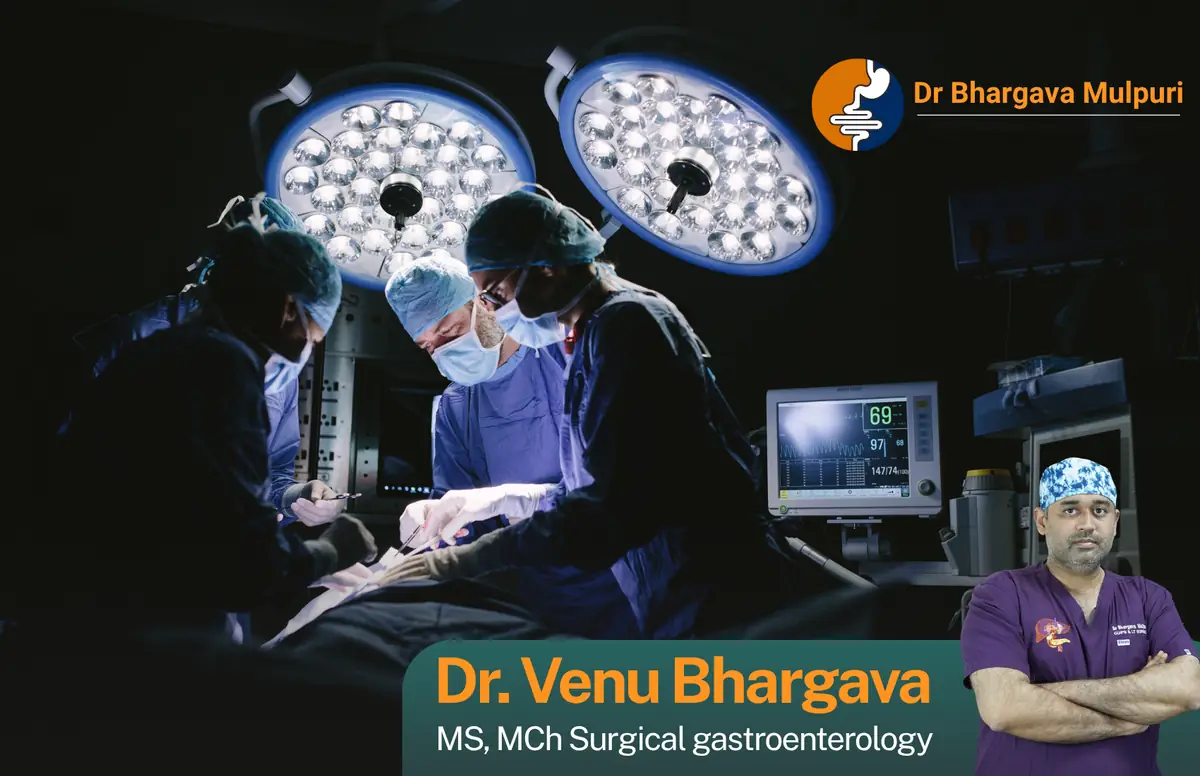
Abdominal emergencies and complex general surgical crises do not announce themselves on a convenient schedule. Sudden severe abdominal pain, distension, vomiting, high fever with rigors, trauma after a road accident or fall, or rapid deterioration after a seemingly minor infection can signal conditions that require immediate surgical judgment and coordinated hospital care. General and emergency surgery addresses life-threatening and limb-threatening problems in the abdomen and soft tissues, where delay measured in hours can change outcomes. At KIMS Arete Hospital, Gachibowli, Hyderabad, Dr. Venu Bhargava Mulpuri, MCh Surgical Gastroenterology from PGIMER Chandigarh, brings more than fifteen years of operative experience, over twelve thousand procedures, and care for more than fifteen thousand patients to the management of GI perforations, intestinal trauma, soft tissue injuries, complex abdominal sepsis, and solid-organ trauma involving the liver, pancreas, and spleen.
Knowing who needs emergency and advanced general surgical care helps families and referring doctors act decisively. Patients with sudden board-like abdominal rigidity, persistent vomiting with inability to pass gas or stool, worsening pain after peptic ulcer disease, or shock with cold clammy skin may have perforation or peritonitis requiring urgent intervention. Those with a history of blunt or penetrating injury to the abdomen, handlebar injuries in children, or falls from height may harbour mesenteric injury, bowel rupture, or bleeding from the liver, spleen, or mesenteric vessels even when initial scans appear reassuring. Soft tissue infections that spread with redness, crepitus, severe pain out of proportion to appearance, or systemic toxicity demand surgical source control alongside intensive resuscitation. Postoperative patients with escalating pain, fever, and tachycardia after prior abdominal surgery may be developing complex intra-abdominal sepsis or anastomotic leak. In each scenario, evaluation must run parallel with resuscitation-not after it-because modern emergency surgery is a team discipline spanning surgeon, anaesthetist, radiologist, intensivist, and nursing staff.
Evaluation in emergency general surgery begins with primary survey and stabilization: airway, breathing, circulation, disability, and exposure in trauma; and aggressive fluid resuscitation, oxygenation, vasopressor support when needed, and broad-spectrum antibiotics early in sepsis. Dr. Mulpuri’s training at PGIMER Chandigarh emphasizes disciplined assessment under pressure, correlating clinical signs with focused imaging. Contrast-enhanced CT of the abdomen and pelvis is invaluable for many adults with suspected perforation, abscess, bowel ischemia, or post-traumatic organ injury, while ultrasonography in the emergency department aids detection of free fluid, gallbladder disease, and some solid-organ injuries. Laboratory markers including lactate, white cell count, renal function, and coagulation guide severity and response to treatment. In penetrating trauma, clinical pathways may mandate laparotomy or laparoscopic exploration based on hemodynamic stability and examination findings. At KIMS Arete Hospital, Gachibowli, the goal is to compress the time from arrival to definitive diagnosis and to the operating theatre when non-operative management is not appropriate, while avoiding unnecessary surgery when close monitoring and interventional radiology can suffice.
Gastrointestinal perforation is a cornerstone of emergency surgical practice. Perforated peptic ulcer, typhoid or tuberculosis-related ileal perforation in endemic contexts, diverticular perforation, malignancy-related blow-out, and iatrogenic injury after endoscopy or procedures each present with peritonitis and sepsis risk. Treatment combines resuscitation, nil by mouth, nasogastric decompression when indicated, intravenous antibiotics, and operative repair-often omental patch closure for duodenal ulcers, resection and anastomosis or stoma formation when bowel is unhealthy, and thorough peritoneal lavage. The surgeon must decide whether primary repair is safe or whether diversion and staged reconstruction better serve a frail or delayed-presenting patient. Dr. Venu Bhargava Mulpuri applies MCh-level expertise to these decisions, balancing speed with durability of repair so that Hyderabad patients receive standards aligned with tertiary referral centres rather than ad hoc improvisation.
Intestinal trauma from road traffic accidents, assaults, or sports injuries may involve contusion, mesenteric tear, or full-thickness rupture with spillage of enteric contents. Blunt trauma algorithms prioritize hemodynamic status: unstable patients with free fluid and positive focused assessment may proceed directly to laparotomy, while stable patients undergo structured CT grading of organ and bowel injury. Penetrating abdominal wounds require local wound exploration or imaging-based pathways to exclude peritoneal violation. When bowel injury is confirmed, resection of non-viable segments, primary anastomosis versus stoma, and damage control surgery in the exsanguinating patient are core skills honed through high-volume emergency practice. Delay in treating intestinal trauma converts localized contamination into diffuse peritonitis and multi-organ failure; early involvement of a surgical gastroenterologist trained in complex abdominal surgery is a rational choice for KIMS Arete Hospital patients and referrals from across Telangana.
Soft tissue injuries and necrotizing soft tissue infections represent another frontier of general and emergency surgery. Crush injuries, degloving, large contaminated wounds, and progressive cellulitis with systemic toxicity require surgical debridement of dead tissue, repeated inspection in the operating room, and sometimes negative-pressure wound therapy after sepsis control. The same surgical mindset applies to complex abdominal wall infections after prior surgery, mesh infection, or post-cesarean and post-laparotomy wound breakdown. Source control-the principle of removing or draining what sustains infection-is as important as antibiotics. Dr. Mulpuri’s experience across thousands of procedures informs aggressive yet tissue-sparing debridement, planning for eventual reconstruction once the patient is stable and cultures guide antimicrobial therapy.
Complex abdominal sepsis arises when intra-abdominal infection escapes containment: ruptured appendicitis with abscess, postoperative anastomotic leak, pancreatitis with infected necrosis, or post-partum and gynecologic sepsis with peritoneal involvement. These patients often present late after primary care or incomplete drainage, carrying high lactate, organ dysfunction, and nutritional depletion. Management includes resuscitation bundles, appropriate imaging to define collections, percutaneous drainage when feasible, and timely laparoscopic or open lavage and control of leak or necrosis. In severe cases, staged procedures and temporary openness of the abdomen may be necessary to relieve compartment pressures and facilitate repeated washouts. Surgical gastroenterology training is particularly valuable here because the surgeon understands foregut, midgut, and hindgut sources of sepsis, pancreatic and biliary complications, and the long-term implications of stoma creation and nutritional support.
Trauma to the liver, pancreas, and spleen demands organ-specific decision-making within emergency timelines. Hepatic injuries range from minor subcapsular hematomas managed non-operatively in stable patients to deep lacerations with active bleeding requiring packing, Pringle manoeuvre, angioembolization, or formal resection in specialist hands. Splenic injury management increasingly favours splenic preservation in stable grades to reduce post-splenectomy infection risk, but uncontrollable hemorrhage or high-grade destruction still mandates splenectomy to save life. Pancreatic trauma is subtle and dangerous: ductal injury may not be obvious initially, yet delayed pancreatic fistula and sepsis follow if diagnosis is missed. CT grading, ERCP or MRCP in selected cases, and operative drainage or resection according to injury grade are integrated into care pathways. Dr. Venu Bhargava Mulpuri’s background in surgical gastroenterology from PGIMER Chandigarh aligns with centres that routinely manage hepatobiliary and pancreatic trauma as part of advanced abdominal surgery, offering Hyderabad patients local access to nuanced organ-preserving and damage-control strategies.
Why choose this surgeon and hospital for general and emergency surgery? Fifteen plus years of experience, twelve thousand plus procedures, and fifteen thousand plus patients underscore exposure to rare and common emergencies alike, refining judgment that textbooks alone cannot provide. MCh Surgical Gastroenterology certification signifies advanced competence in complex GI surgery beyond basic general surgery credentials. KIMS Arete Hospital in Gachibowli combines modular operation theatres, anaesthesia for high-risk cases, postoperative recovery areas, and linkage to intensive care and diagnostic imaging appropriate for emergency workflows. For families in Hyderabad seeking a named senior surgeon who can operate and also coordinate multidisciplinary care, continuity from first emergency laparotomy through ward recovery and outpatient review reduces fragmentation that often plagues emergency admissions.
Recovery and follow-up after emergency abdominal surgery depend on initial severity, presence of sepsis, need for stoma, and comorbidities such as diabetes and heart disease. Patients who undergo perforation repair may resume gradual oral intake as bowel function returns, with proton pump inhibitors and Helicobacter therapy when indicated for ulcer disease. Trauma and sepsis survivors may require prolonged hospitalization, nutritional support, physiotherapy, and wound care. Organ injury managed non-operatively needs serial imaging and activity restriction until healing is confirmed. Dr. Mulpuri emphasizes clear discharge instructions: wound warning signs, drain management, stoma education when applicable, and scheduled reviews at KIMS Arete Hospital, Gachibowli to detect late collections, incisional hernia, or adhesive bowel obstruction early. Long-term follow-up also addresses underlying causes-ulcer prevention, alcohol counselling, gallstone disease, or trauma rehabilitation-so that the index emergency becomes a turning point toward sustained health rather than a recurring crisis.
When should you seek immediate consultation or transfer to emergency surgical care? Call an ambulance or proceed to hospital without delay for collapse, fainting, or cold clammy skin with abdominal pain; rigid abdomen and inability to stand upright; persistent vomiting with green bilious content; high fever with confusion; known trauma with increasing abdominal girth or left shoulder pain suggesting splenic bleeding; gunshot or stab wounds to the abdomen; or rapidly spreading skin infection with severe pain. For subacute symptoms-worsening pain after days of indigestion, low-grade fever after prior surgery, or non-healing wounds with foul discharge-contact a surgical specialist promptly even if vitals seem stable, because complex abdominal sepsis can smoulder before sudden decompensation. Dr. Venu Bhargava Mulpuri at KIMS Arete Hospital, Gachibowli, Hyderabad, stands ready to evaluate, operate when necessary, and walk with patients and families through the most frightening hours of general and emergency surgery with skill, clarity, and the depth of training that MCh Surgical Gastroenterology from PGIMER Chandigarh represents.
Patients travel from Attapur, Upperpally, Mehdipatnam, Rajendranagar, Ameerpet, Banjara Hills, and across Telangana for general & emergency surgery care with Dr. Venu Bhargava Mulpuri at KIMS Arete Hospital, Gachibowli (PIN 500104).
Clinical focus
Which general & emergency surgery conditions need surgery?
Specialist evaluation and surgical care for the following general & emergency surgery conditions at KIMS Arete Hospital, Gachibowli.
01GI perforations
Emergency surgical management of gastrointestinal perforations, ensuring quick repair, infection control, and prevention of life-threatening complications.
02Intestinal trauma
Specialised care for intestinal trauma, including blunt and penetrating injuries, with expertise in repair and reconstruction for safe recovery.
03Soft tissue injuries
Comprehensive treatment for soft tissue injuries of the abdomen, using surgical precision to control bleeding, repair damage, and prevent infection.
04Complex abdominal sepsis
Advanced surgical and critical care for complex abdominal sepsis, combining infection control, drainage, and life-saving interventions.
05Trauma – liver, pancreas & spleen management
Expertise in managing liver, pancreatic, and splenic trauma, using both conservative and surgical approaches for optimal outcomes in emergency cases.
What happens during your visit
Step-by-step care pathway in Hyderabad
From first consultation at KIMS Arete Hospital, Gachibowli to recovery follow-up - a clear pathway patients can expect.
- 1
Consultation
Meet Dr. Venu Bhargava Mulpuri at KIMS Arete Hospital, Gachibowli for history, examination, and a clear treatment plan.
- 2
Investigations
Blood tests, imaging (USG / CT / MRI / endoscopy as needed), and fitness assessment before any procedure.
- 3
Treatment discussion
Review laparoscopic vs open options, risks, expected hospital stay, and recovery timeline in plain language.
- 4
Procedure & hospital care
Surgery is performed with peri-operative monitoring and coordinated nursing care at KIMS Arete Hospital, Gachibowli.
- 5
Follow-up
Wound review, diet guidance, medicine titration, and long-term surveillance when cancer or transplant care applies.
Medically reviewed by
Dr. Venu Bhargava Mulpuri - MCh Surgical Gastroenterology
Surgical Gastroenterologist, HPB & Liver Transplant · 15+ years · KIMS Arete Hospital, Gachibowli
Authoritative references
Educational context draws on recognised public-health and medical research authorities.